

FAIRFIELD SCHOOL
An exceptional independent day school and nursery for boys and girls from 2 to 11 years of age. Where no child goes unnoticed
Read more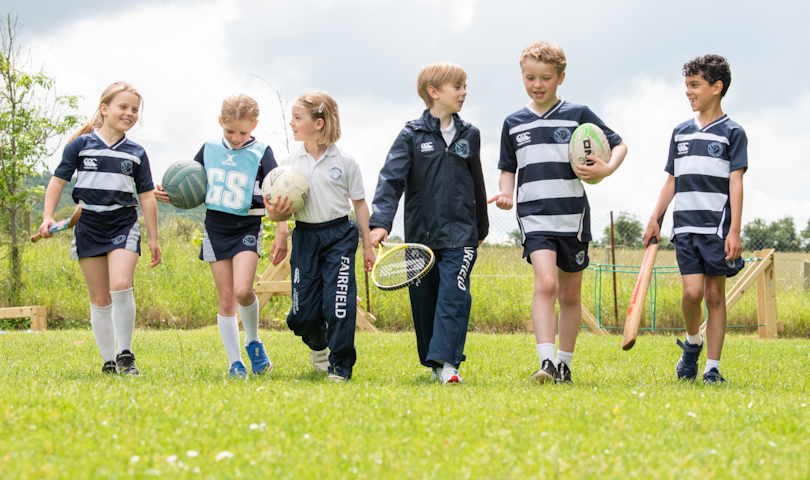
.png?compress=auto&w=810&h=480&fit=crop&crop=entropy)
.png?compress=auto&w=810&h=480&fit=crop&crop=entropy)
An exceptional independent day school and nursery for boys and girls from 2 to 11 years of age. Where no child goes unnoticed
Read moreDiscover a unique educational experience at Fairfield School, our exceptional co-educational independent primary school on the outskirts of Bristol.
Our close-knit, small school environment helps us to cultivate each child's own potential and foster a love of learning through our creative curriculum.
Beyond academics, we offer a diverse range of extra-curricular activities, fostering a holistic learning experience.
Contact us to arrange a tour of Fairfield School, where individuality is celebrated, values are instilled and a well-rounded education prepares children for a successful future.
At the heart of our school lies the belief that every child is a unique individual; no child goes unnoticed.
In creating a secure, happy and vibrant environment within our small school, where everyone knows everyone, we aim to nurture and develop each child's potential and talents, so that when he or she leaves us at the end of Year 6, they do so with high levels of self-confidence, self-esteem and a set of values which will equip them to deal with future challenges.
Our values are based on mutual respect, tolerance and consideration towards others and within our community each child finds his or her unique place. Whilst we achieve outstanding examination results, enabling our pupils to move on with confidence at the age of 11 to the senior school of their choice, we believe education is about far more than examinations; our children learn to become part of a community, they develop confidence, their own opinions and an understanding of the modern world.
We also provide a broad programme of extra-curricular activities and have close links with the local community.
I look forward to welcoming you to one of our Open Events or individual tours.
Mrs Lesley Barton
Headmistress

Rated 'Best Independent Prep School in Bristol and the Wider South West Area'
November 2016
Fairfield School
Fairfield Way
Backwell
Bristol BS48 3PD


Fairfield is accredited by the Independent Schools Council, affiliated to the Independent Schools Association and the Association of PNEU Schools.
Fairfield PNEU School (Backwell) Limited is a company limited by guarantee. Registered in England No. 814684. The company is established for charitable purposes. Charity No. 310215.
Classroom, class and staff photographs reproduced with permission from Dave Pratt Photography; Whole school and individual staff photographs reproduced with permission from Colorfoto Ltd.
Copyright © 2024 Fairfield PNEU School (Backwell) Limited. All rights reserved.


